Article 2: Rewired: My journey back from stroke, one relentless step at a time
Estimated reading time: 9 minutes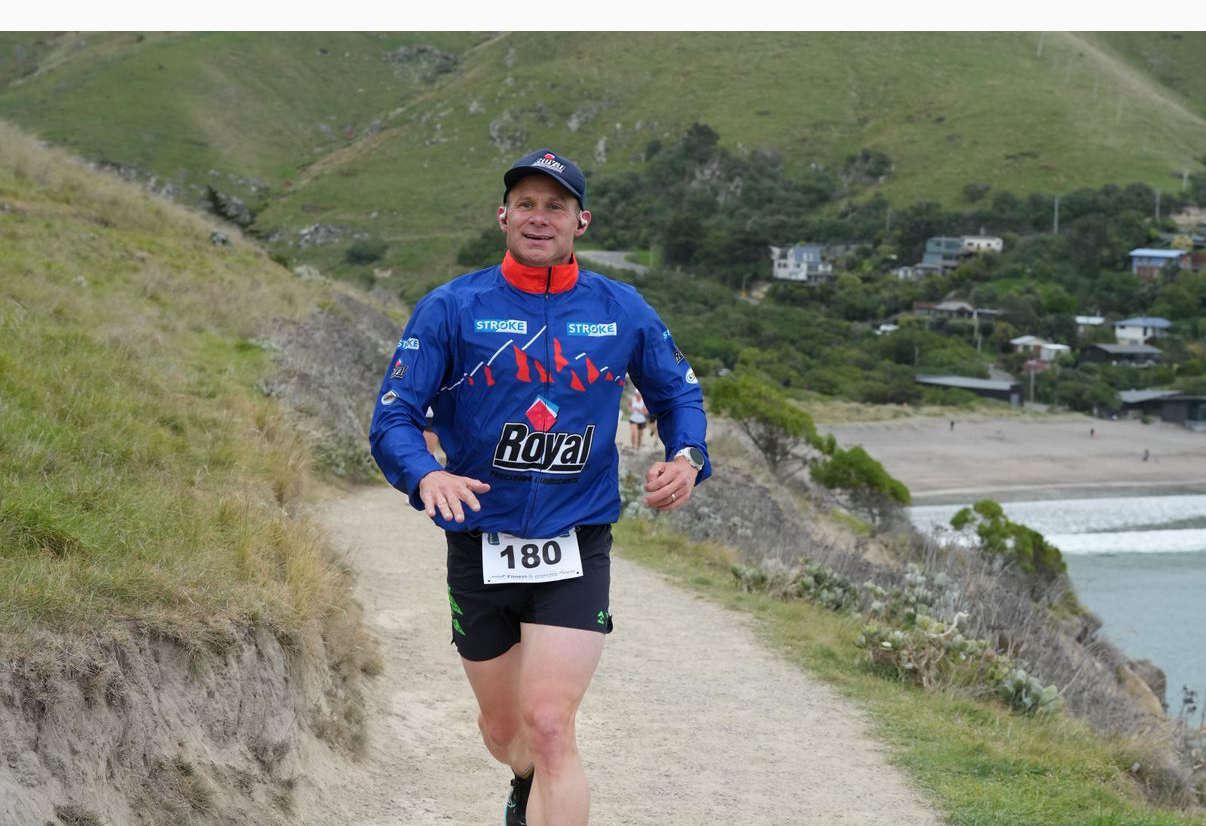
Article Summary:
This article presents a deeply personal and practical account of stroke recovery, tracing the journey from acute medical crisis through rehabilitation and into long-term rebuilding of life, identity, and performance. It reinforces a central truth that underpins the Rewired Runner model.
Recovery is not a single breakthrough moment; it is built through relentless, structured, and repeatable effort over time.
About the Author
Mark Ford is a stroke survivor who turned ultramarathon runner and is the founder of Rewired Runner. He helps survivors rebuild belief, energy, and purpose through movement.
Important Safety Note
This article shares lived experience supported by research, but it is not medical advice. Stroke recovery and mental health responses vary widely. If you’re experiencing persistent low mood, panic, trauma symptoms, or thoughts of self-harm, please reach out to a qualified clinician or crisis support in your country.
Introduction
The hospital was surviving. Rehab was structured. Home was reality. This is the true account of how I rebuilt my life after a stroke, without shortcuts, without pretending it was easy, and without losing the hope that tiny wins become turning points.
Section 1: The night everything changed
On February 19, 2019, at 1:15 a.m., I woke in my bedroom as if a wave hit me from the inside, like water had shot up my nose. I tried to stand. I collapsed. I seized. When I opened my mouth, the words came out wrong, tangled and distorted. The paramedics arrived quickly and said the words no one expects to hear: “This could be a stroke.”
In the emergency department, a scan lit up with a clot. It dissolved soon after, but not before damage was done. My left side wouldn’t cooperate. I couldn’t swallow. A migraine hammered behind my eyes. A clinician tested sensation with a pin, and I couldn’t feel it in my left leg. When I was finally allowed to try a drink of water, it spilled from the left corner of my mouth; I had lost complete control on that side.
A few days later, doctors found the hidden cause: a patent foramen ovale (PFO), a small opening in the heart that, in some people, can let a clot travel to the brain. Knowing the cause didn’t make my body feel different, but it gave the chaos logic and a way to reduce future risk.
Section 2: “Recovery isn’t a straight line. It’s a series of tiny wins buried inside long, uncertain days.”
Those first days were defined by fatigue that felt cellular and by the controlled urgency of a stroke ward. Staff were skilled and kind; I was determined and stunned. Family visited; we kept it simple. Presence mattered more than speeches. Gratitude and grief coexisted.
Six days after the event, I was transferred to the rehabilitation unit. The hospital phase taught urgency and humility; rehab would teach systems and repetition.
Rehab: Systems, Setbacks, and the First Spark of Hope.
Rehab didn’t feel like a dramatic new beginning. It felt like a timetable pinned to a wall and a quiet agreement to keep showing up. Days settled into a rhythm: physiotherapy, occupational therapy, speech therapy, psychology, rest, repeat.
Physio began with careful bike warm-ups, balance work, sit-to-stands, and early sessions in the parallel bars. We added elastic-band resistance as patterns returned and layered in dual-task drills, moving while handling simple ball or memory tasks. A hallway harness made early gait work safe.
OT rebuilt daily life: laying out a T-shirt the right way, small wins like using a toast board, and the milestone of a first independent shower.
Speech therapy focused on slower pacing, deliberate articulation, and breath–voice coordination. Sessions were quiet and repetitive by design, and they worked.
Left-sided weakness shaped everything. We trained attention deliberately, placing items on the left, scanning, and cueing engagement until attention itself became a habit.
Section 3: “What rehab taught me”
“Rehab taught me that attention is a muscle. You train it the same way you train anything else, reps.”
Rehab granted a day pass so I could attend the kids’ triathlon. I had pictured a small victory, standing on the sideline, cheering. Reality was different: cold rain, a wheelchair, and a crowd whose kindness felt edged with pity. Water pooled on the seat. That night, I wanted to run away. There was nowhere to go. I stayed.
Two days later, back in physio, working under resisted movement, I felt it, the first flicker in my left shoulder. To anyone else, it was nothing. To me, it was hope made visible.
We used functional electrical stimulation (FES) early, passively at first. The device pulsed while I focused on the feel of movement and the intention to move. No instant transformation, just a tool used in the right place, in service of repetition and sensation.
Post-stroke fatigue didn’t ask permission. Some days, the right decision was to stop before the wheels came off. Pacing wasn’t a lack of ambition; it was strategy.
Section 4: Home, independence and the long road back
Leaving rehab didn’t mean I was recovered. It meant rebuilding life without a timetable or a team around me every hour. Home was reality.
The first year, fatigue dominated my life. Every day, I slept in the afternoon for the first 12 months. Only toward the end of that year did I transition some naps to Yoga Nidra, a guided deep-rest practice that restored me without draining energy.
Losing my driver’s Licence for 12 months was confronting. To regain it, I had to pass: a physical assessment with a physiotherapist, the road code theory test, a driving simulator test, and a practical on-road test. I failed the simulator the first time due to cognitive overload, too much fast visual data. I borrowed my brother’s PlayStation, bought Gran Turismo, a wheel and pedals, and retrained nightly. Three months later, I passed the simulator and the road test and got my Licence back.
I returned to work around 10 months post-stroke, starting with two half-days a week. I looked fine, but inside I was working twice as hard. Fatigue stripped away emotional filters; I reacted faster than I meant to. In hindsight, I rushed back too soon, trying to prove I was who I’d been. Systems saved me: lists, routines, alarms, structured thinking, and cognitive scaffolding that protected performance. About 18 months post-stroke, I was asked to build an international bitumen import business, not a charity, a challenge, and it rebuilt my professional identity.
Section 5: PFO closure and the first run back
My PFO was closed in May 2019, about four months after the stroke. Six days later, I laced up and ran for the first time: two kilometres, slow, close to home. It wasn’t about fitness. It was about freedom, the simple power of forward motion.
Relearning Rhythm, Pool to Pavement.
Running didn’t return clean. My left arm swing was limited and not fluid; coordination felt foreign. Before I could run well, I had to retrain my movement like a beginner.
In the pool, I tried aqua jogging. My arms didn’t move like arms; they moved like train rods, stiff back-and-forth with no rhythm. So, I broke it down: slow walking in water, deliberate alternating arm drive, left, right, left, right, then more speed, more intent, more repetition. Neuroplasticity rewards consistency. Rhythm returned first in water, then on land.
Section 6: Building the engine
My return to running was slow and structured: walking foundation first, then short road runs, two kilometres, then three, then five, building consistency before distance. Trails came later; hills taught strength and patience. Then 10 km, 21 km, 24 km, 65 km, 86 km races. Every distance changed me. More than the distances, the work changed me.
“Progress isn’t luck. Progress is engineered.”
Three 100 km Ultramarathons, Seven Months.
In late 2024, I committed to three 100 km ultramarathons in seven months for stroke awareness: UTMB Kosciuszko 107 km (Dec 2024), Tarawera Ultramarathon 102 km (Feb 2025), and Ultra-Trail Australia 100 km (May 2025). Across those races, I climbed more vertical than Mount Everest. I am believed to be the first adaptive athlete to finish UTMB Kosciuszko 107 km. The why never changed: to show what’s possible after brain injury.
Section 7: What recovery taught me
Recovery didn’t give me back my old life. It gave me a mission. To show stroke survivors and anyone rebuilding after adversity that you can retrain your brain, reclaim your body, and lead with purpose again. This isn’t a story about running; it’s a story about rewiring life. That’s why I built Rewired Runner: to share the tools, mindset, training, and hope that it helped me rebuild, not perfectly, but powerfully.
Support Us:
If you found value here, consider clicking the (Support Us button on the website), which is linked to “Buy Me a Coffee”, to make a small donation. This donation will help us to continue creating practical recovery resources.
References: (simplified, policy-aligned)
Author: Mark Ford
Disclaimer:
Medical
The content on this channel is for informational and motivational purposes only and should not be considered medical, therapeutic, or professional advice. I am not a licensed healthcare provider. Always consult your physician or a qualified health professional before starting or modifying any rehabilitation program, exercise routine, medication, or lifestyle change.
Personal Experience
Everything shared here stories, drills, opinions, and training methods comes from my personal stroke-recovery journey and individual learnings. Your situation, risks, and capabilities may differ.
Organisational Independence
I currently serve as an independent director and/or volunteer with several organisations (including St George’s Hospital and the Stroke Foundation).
All views expressed on this channel are strictly my own and do not represent, endorse, or reflect the positions of any organisation I am affiliated with.
No Liability
While I strive to present accurate, up-to-date information, I make no warranties or guarantees, express or implied about the completeness, reliability, or applicability of the content. Your use of any information provided is strictly at your own risk. I accept no responsibility for injury, loss, or damage that may result.
Affiliate & Sponsorship Note
From time to time, this channel may mention or link to products or services. If an affiliate link is used, I may earn a small commission at no extra cost to you. I only mention resources I genuinely believe can help the recovery community.
Emergency Disclaimer
If you think you are experiencing a medical emergency, call your local emergency number immediately. Do not rely on videos or online content for urgent medical care.