Article 11: Building to endurance: My 300 km ultra journey
Estimated reading time: 9 minutes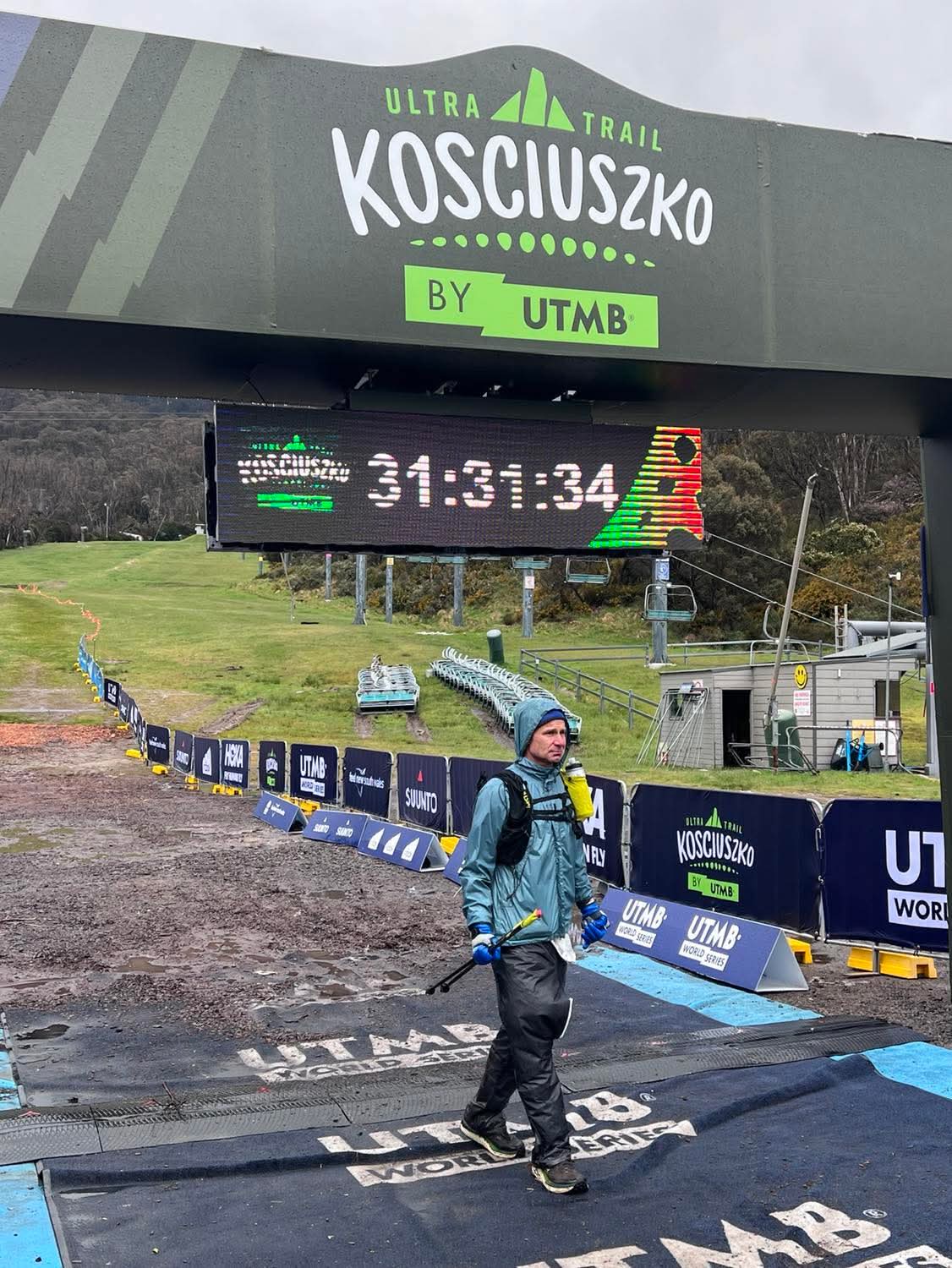
Article Summary
This article presents a powerful long-term perspective on stroke recovery, demonstrating how sustained, structured effort can evolve from basic rehabilitation into high-level physical and personal achievement. It reframes recovery not as a finite process, but as a continuum that can extend into endurance, resilience, and purpose-driven performance.
It reinforces a central principle of the Rewired Runner philosophy.
Recovery does not stop at independence; it can progress into strength, endurance, and a new identity.
About the Author
Mark Ford is a stroke survivor who turned ultramarathon runner and is the founder of Rewired Runner. He helps survivors rebuild belief, energy, and purpose through movement.
Important Safety Note
This article shares lived experience supported by research, but it is not medical advice. Stroke recovery and mental health responses vary widely. If you’re experiencing persistent low mood, panic, trauma symptoms, or thoughts of self-harm, please reach out to a qualified clinician or crisis support in your country.
Introduction:
How I went from a stroke survivor learning to walk again to finishing three 100km ultramarathons in seven months.
Section 1: From recovery to rebuild to endurance
People often see the finish line photos and think ultramarathon runners must be built differently. Trust me, I wasn’t. Six and a half years ago, I was lying in a hospital bed after a stroke, unable to move the left side of my body. I had no balance, no speech clarity, no energy. That first year of rehab was about survival. The next few years were about rebuilding. Endurance came later, long after anyone stopped watching.
It didn’t happen quickly. It wasn’t glamorous. It was slow, repetitive work. One small win at a time. There was no miracle moment. Instead, something harder: doing the basics for years.
Ultrarunning didn’t begin as a dream. It began as desperation; I needed something big enough to force me to grow physically, mentally, and emotionally. Endurance taught me structure when fatigue tried to control me. It forced movement when my energy crashed. It exposed excuses and demanded honesty. Running wasn’t about racing; it was part of rebuilding my brain, my belief, and my purpose.
I didn’t start endurance because I was strong. I became strong because I started.
Section 2: Why I chose the 300km challenge
In late 2023, I set a goal: complete three 100km ultramarathons in seven months. More than 300km of mountain racing and over 10,000 metres of climbing. To most people, that sounds ridiculous. To me, it made sense. I wanted to prove something, not to others, but to myself and to stroke survivors watching from rehab units and hospital beds.
I wanted to show that recovery doesn’t end at six months, as the old textbooks say. Progress is still possible years later, not by luck, but by consistent effort multiplied over time.
This challenge was about purpose. I wanted to use my story to raise stroke awareness and give hope to survivors and families who feel alone in the fight. My message was simple:
Your comeback doesn’t have to look like anyone else’s.
Your marathon might be to your mailbox, and that counts.
Start where you are, use what you have, do what you can.
Ultrarunning taught me how to break down massive goals into pieces. No one runs 100km in one go; you run to the next aid station. In stroke recovery, it’s the same: you don’t “get your life back” in one move. You win the hour in front of you. Then the next. Then the next.
I also learned to accept failure without quitting. Not every training day went well. Not every session was perfect. There were emotional challenges too, frustration, self-doubt, and comparison. But like in racing, you keep moving forward.
Endurance isn’t about speed or talent. It’s about choosing not to stop.
Section 3: Race 1: UTMB Kosciuszko 107km (Australia)
The first race began at 7 am in Perisher with over 900 runners. Just before the 39km aid station, a thunderstorm forced organisers to pause the race for two hours. Standing in the rain and lightning, people were shivering and mentally breaking. When racing resumed, hundreds were funnelled onto tight single track, creating long queues and frustration.
At the 54km aid station, chaos hit. Around 300 to 400 runners arrived at once. I lined up for soup, and another runner accidentally kicked my cup over. So, I lined up again and stayed patient. Then I dropped my drink bottle lid off a three-storey balcony, gone forever. I had to adapt without it. The mental battle was harder than the physical one. At 62km, I saw my dad who was crewing for me, a massive lift in the rain and darkness.
Later, my headlamp faded, and I had to walk beside others to share their light. At the 90km aid station, I saw Dad again, reset, and found another gear. In the final 14km, I overtook 43 runners and finished in 19 hours and 3 minutes. Over 300 people DNF’d. It wasn’t pretty, but it was a finish. The mission was alive.
Section 4: Race 2: Tarawera Ultra 102km (New Zealand)
Only eight weeks separated Kosciuszko and Tarawera, not long enough for a full recovery. I arrived at the start line still carrying fatigue. The race began at 7 am with 14km of flat running before climbing through forests and trails around Rotorua. It was hot early.
At 58km, we were required to pack mandatory warm gear. I also took the chance to change socks, shoes, shirt, and hat. A smart move, but I pushed too hard on the first big climb after that and overheated. Dizziness hit. My energy dropped badly for 3 to 4km.
At the 83km aid station, I took a breather and ate a pottle of beef noodles. Sounds simple, but it brought me back to life. My stomach had had enough of gels. With 17km to go, I kept moving and managed to run the final 7km strong, finishing in the top half of the field. It wasn’t fast, but it was solid. I stayed in the game.
Section 5: Ultra-Trail Australia 100km (Blue Mountains)
The final race was the most emotional. UTA is brutal, famous for stair climbs and technical terrain. After two days of drizzling, race morning was clear. 3,000 runners started across the combined distances.
Early in the race, we hit steel ladder descents off cliff sections. Normally fine, but with my stroke-affected left hand, gripping steel while descending vertical ladders was a test of control and patience. I slowed down, stayed calm, didn’t panic.
At 68km, my headlamp began flickering. I swapped in my backup, but it died at 75km. Suddenly, I was alone on a dark Australian mountain trail with no light.
That could have broken me. Instead, I adapted. I tucked in between two runners who shared their light and kept going. I took a fall, a bloodied knee, and a bruised shin, but forward was the only option.
At 80km, I reached an aid station, changed my battery, and something clicked. I found another gear from 80 to 92km, running hard through the dark fire trails. It reminded me that there is always more inside us than we think.
Then came the final test:
931 steps straight up, The Furber Stairs.
After more than 19 hours on my feet, I climbed every step. No emotion. Just purpose. At the top, I ran to the finish. Quiet pride. Job done.
Three 100km races. Seven months. Mission complete.
Section 6: Closing Reflection
This was not a story of talent. This was a story of patience. A 6.5 year rebuild made possible by 0.1% improvements stacked over time. Most of that work was invisible. Done when no one was watching. In garages. In rehab gyms. In silence.
I am not fully recovered. I still have speech challenges late in the day. My left side is slower. Fatigue still shows up. But stroke didn’t end my story, it rewired it. And with the right mindset, movement, and mission, I found something better than going back to who I was; I became someone stronger.
None of this would have been possible without the support of my family, the stroke community, and my crew. A special thank you to Corporate Energy, whose support helped drive awareness for stroke recovery and made this mission possible.
This journey continues. Next, I take on the Kosciuszko 100-Miler (160km). If I earn that finish line, I will stand at the start of the UTMB World Series Final in France, 172km with 10,000m of climbing, in August 2026. The pinnacle of ultrarunning.
I don’t know if I can finish UTMB. But I know this, I will give everything I have to try.
Support Us:
If you found value here, consider clicking the (Support Us button on the website), which is linked to “Buy Me a Coffee”, to make a small donation. This donation will help us to continue creating practical recovery resources.
References: (simplified, policy-aligned)
Author: Mark Ford
Additional Disclaimer:
Medical Disclaimer
The content on this channel is for informational and motivational purposes only and should not be considered medical, therapeutic, or professional advice. I am not a licensed healthcare provider. Always consult your physician or a qualified health professional before starting or modifying any rehabilitation program, exercise routine, medication, or lifestyle change.
Personal Experience
Everything shared here stories, drills, opinions, and training methods comes from my personal stroke-recovery journey and individual learnings. Your situation, risks, and capabilities may differ.
Organisational Independence
I currently serve as an independent director and/or volunteer with several organisations (including St George’s Hospital and the Stroke Foundation).
All views expressed on this channel are strictly my own and do not represent, endorse, or reflect the positions of any organisation I am affiliated with.
No Liability
While I strive to present accurate, up-to-date information, I make no warranties or guarantees, express or implied about the completeness, reliability, or applicability of the content. Your use of any information provided is strictly at your own risk. I accept no responsibility for injury, loss, or damage that may result.
Affiliate & Sponsorship Note
From time to time, this channel may mention or link to products or services. If an affiliate link is used, I may earn a small commission at no extra cost to you. I only mention resources I genuinely believe can help the recovery community.
Emergency Disclaimer
If you think you are experiencing a medical emergency, call your local emergency number immediately. Do not rely on videos or online content for urgent medical care.