Article 3: Recovery timeline
Estimated reading time: 8 minutes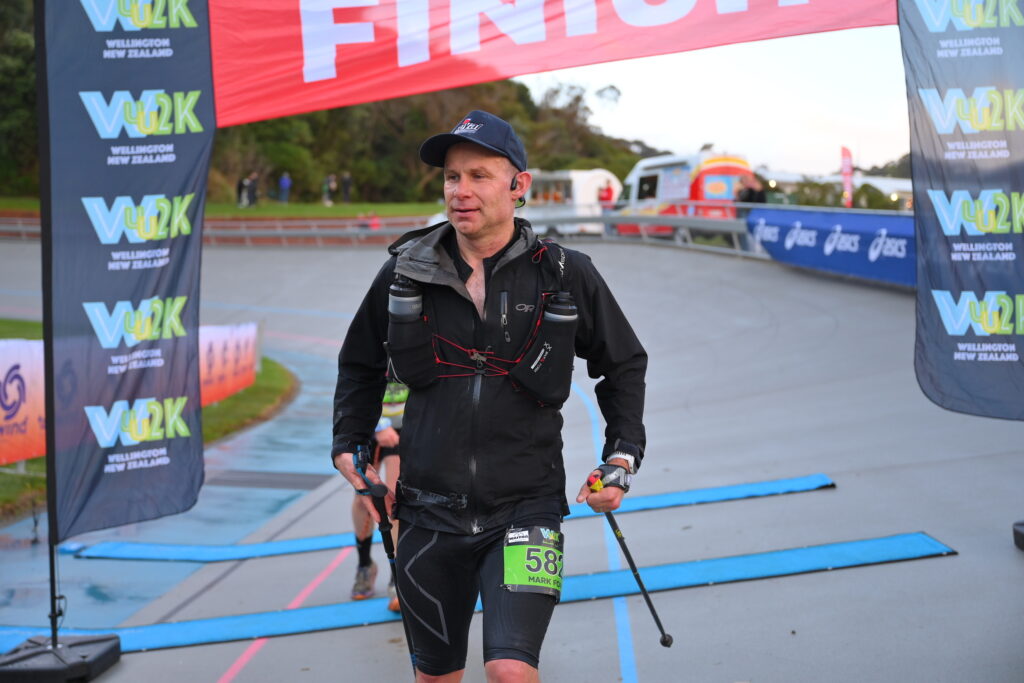
About the Author
Mark Ford is a stroke survivor who turned ultramarathon runner and is the founder of Rewired Runner. He helps survivors rebuild belief, energy, and purpose through movement.
Important Safety Note
This article shares lived experience supported by research, but it is not medical advice. Stroke recovery and mental health responses vary widely. If you’re experiencing persistent low mood, panic, trauma symptoms, or thoughts of self-harm, please reach out to a qualified clinician or crisis support in your country.
Introduction: Timelines without false deadlines
The most common question I hear is, “How long will this take?” The honest answer: longer than you want, shorter than you fear, and almost always non-linear. Early gains can be fast, then slow down. Plateaus appear, then shift. Some things return sooner; others take years. And yes, there’s an element of luck: where and how the brain was injured matters.
What the science says, in plain terms:
- Recovery is typically fastest in the first 3 months, then slows but continues.
- Neuroplasticity is lifelong; the brain can keep adapting with the right conditions.
- Progress varies by domain (movement, speech, thinking, energy, mood), by load (how much you ask of the system), and by context (sleep, stress, support).
- What you do repeatedly, at a dose you can sustain, is a powerful driver of change.
Section 1: The shape of recovery (what research shows)
1] Expect a curve, not a cliff.
Many survivors improve rapidly early on (spontaneous biological recovery and intensive therapy), then the curve flattens, which can feel like “stopping.” It usually isn’t. Think of it as entering a training phase: smaller gains that stack when practice is specific, frequent, and fueled.
2] Domains move at different speeds.
Motor function often shows clearer early gains, then slower refinements (coordination, balance, dexterity).
Speech/language can improve for years with targeted, high-quality practice.
Cognition/energy are highly load-sensitive: they improve but are the first to dip under fatigue or stress.
Mood/identity typically lags the body, many of us need time to process loss and build forward.
3] Dose and distribution matter.
Short, frequent practice blocks usually outperform occasional marathons (distributed practice). Task-specific work wires the exact pathways you want.
4] “Luck” and load.
Location/extent of injury, age, pre-stroke health, and early severity influence the starting point. After that, what you repeatedly do (and recover from) shapes the trajectory.
Working forecast, not a deadline: plan in 4- to 12-week blocks with specific, measurable targets. Review, adjust, repeat.
Section 2: My timeline (one person’s path, not a template)
I can’t give you your dates, but I can share mine to show that meaningful gains can keep coming well beyond the early window.
Weeks 1–6 (acute → early rehab): basics first, swallow, sit, stand and coordinate. I remember the first tiny flicker in my left shoulder after relentless effort and stimulation. Small, but it changed everything: the brain was listening.
Months 2–4: daily therapy rhythm; energy crashes were common. I focused on function and safety, not speed.
Around 4 months: I started running for the first time since the stroke, a slow 2 km with my wife. My left arm wouldn’t swing properly. Two things helped: I’d been tapering for an 86 km ultramarathon at the time of my stroke (so I was in better running shape than many survivors), and I was lucky that my stroke damage allowed this kind of graded return. I kept runs short, close to home, and treated them as gentle neuro-sessions, not performance.
Around 10 months: I began returning to work very gradually, a few hours, twice a week, then built up slowly over time. In hindsight, I could have given myself more recovery time first, but the graded return taught me what my new limits were.
Around 12 months: I regained my driver’s licence after structured re-testing, supported by targeted brain training to prepare for simulator and on-road assessments.
Years 2–3: distances and day-to-day capacity stretched. Not linear; many days were still hard.
Years 4–6: big gains in work capacity, emotional regulation, and clarity windows. As fitness and breath support improved, I often noticed more reliable speech control and better overall energy.
Year 6–7: I completed three 100 km ultramarathons in seven months. That didn’t happen overnight; it was the product of thousands of tiny efforts stacked over years.
Even now, I pace my load. I plan around my best hours. I’m not “back to before”, I’m built forward for the life I live now.
Section 3: Setting expectations you can live (and progress with)
1] Use “bands,” not promises. Replace “I’ll be normal in six months” with bands like:
- 4–12 weeks: safety, foundations, early function.
- 3–12 months: proficiency in key tasks; clearer picture of strengths/limits.
- 1–3 years: deeper capacity, endurance, coordination, confidence.
- 3–7 years: refinement, bigger projects, return to complex roles, identity rebuild.
2] Choose levers you can control:
- Specificity: practice the exact thing you want to improve.
- Frequency: small, frequent blocks you can repeat tomorrow.
- Fuel & sleep: stable energy supports plasticity; keep nutrition and rest consistent.
- Pacing: don’t “sprint the climb.” Scale tasks before you crash.
- Context: quieter environments and earlier-day windows often improve quality.
- Review: every 4 weeks, note one thing that improved, one that stalled, and the next tiny adjustment.
3] Expect plateaus; treat them as training zones:
- Plateaus feel like nothing’s happening; often, consolidation is happening. Change one variable (task difficulty, duration, environment), keep the others steady, and reassess in two weeks.
4] Hold space for emotion and identity:
- Grief is part of this. Acceptance isn’t giving up; it’s facing the course you’re actually on so you can choose the next step. My turning point was realising I wasn’t rebuilding the old city; I was rebuilding a city for today.
5] Keep the belief loop turning.
- Action → Consistency → Progress → Belief → Motivation → (back to) Action.
- A finished tiny step today is evidence that your brain can use tomorrow. When in doubt, shrink the goal to the next checkpoint, complete it, fuel, and come back.
Section 4: The answer you can trust
How long will it take? Long enough to demand patience; short enough that today’s work matters. Early changes are encouraging, but some of my most meaningful gains arrived in years four, five, and six. Your path will be your own, influenced by injury, effort, support, and yes, some luck. The best way to meet an uncertain timeline is with certain steps: specific practice, steady fuel and sleep, survivable pacing, honest reviews, and values that keep you showing up.
You don’t need the whole map. You need the next step, and a way to take it again tomorrow.
Support Us:
If you found value here, consider clicking the (Support Us button on the website), which is linked to “Buy Me a Coffee”, to make a small donation. This donation will help us to continue creating practical recovery resources.
References: (simplified, policy-aligned)
Cramer SC., et al. Harnessing neuroplasticity for clinical applications. Brain, 2011.
Kleim JA., Jones TA. Principles of experience-dependent neuroplasticity. Journal of Rehabilitation Research & Development, 2008.
Kwakkel G., et al. Intensity and timing of practice after stroke. Lancet Neurology, 2004–2008.
Bernhardt J., et al. Time course and patterns of recovery after stroke. Stroke, various.
Boyd LA., Winstein CJ. Neuroplasticity in motor learning and rehabilitation. Neuropsychologia, 2004–2014.
Langhorne P., Bernhardt J., Kwakkel G. Stroke rehabilitation. The Lancet, 2011–2018.
Brady MC., et al. Speech and language therapy for aphasia (dose/frequency). Cochrane Review, 2016.
Stinear CM., et al. Predicting motor recovery after stroke. Neurorehabilitation and Neural Repair, 2017.
Saunders DH., et al. Physical fitness training for stroke survivors. Cochrane Review, 2016.
Disclaimer
Medical Disclaimer
The content on this channel is for informational and motivational purposes only and should not be considered medical, therapeutic, or professional advice. I am not a licensed healthcare provider. Always consult your physician or a qualified health professional before starting or modifying any rehabilitation program, exercise routine, medication, or lifestyle change.
Personal Experience
Everything shared here stories, drills, opinions, and training methods comes from my personal stroke-recovery journey and individual learnings. Your situation, risks, and capabilities may differ.
Organisational Independence
I currently serve as an independent director and/or volunteer with several organisations (including St George’s Hospital and the Stroke Foundation).
All views expressed on this channel are strictly my own and do not represent, endorse, or reflect the positions of any organisation I am affiliated with.
No Liability
While I strive to present accurate, up-to-date information, I make no warranties or guarantees, express or implied about the completeness, reliability, or applicability of the content. Your use of any information provided is strictly at your own risk. I accept no responsibility for injury, loss, or damage that may result.
Affiliate & Sponsorship Note
From time to time, this channel may mention or link to products or services. If an affiliate link is used, I may earn a small commission at no extra cost to you. I only mention resources I genuinely believe can help the recovery community.
Emergency Disclaimer
If you think you are experiencing a medical emergency, call your local emergency number immediately. Do not rely on videos or online content for urgent medical care.