Article 6: Sleep after stroke: The quiet multiplier of recovery
Estimated reading time: 9 minutes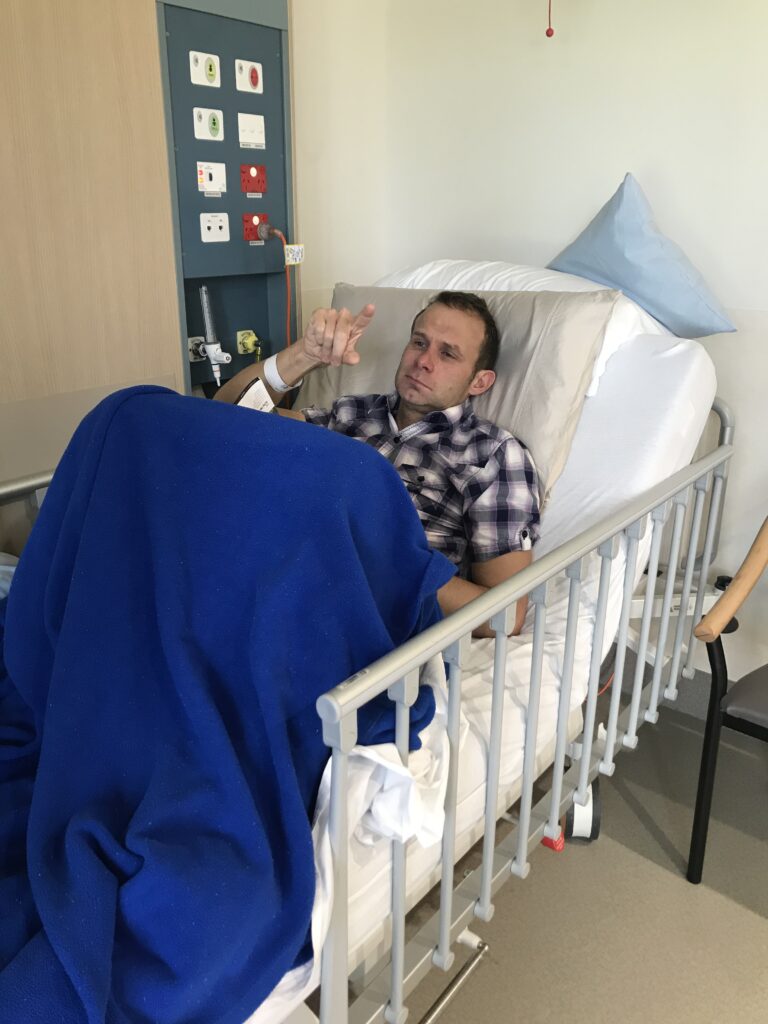
About the Author
Mark Ford is a stroke survivor who turned ultramarathon runner and is the founder of Rewired Runner. He helps survivors rebuild belief, energy, and purpose through movement.
Important Safety Note
This article shares lived experience supported by research, but it is not medical advice. Stroke recovery and mental health responses vary widely. If you’re experiencing persistent low mood, panic, trauma symptoms, or thoughts of self-harm, please reach out to a qualified clinician or crisis support in your country.
Introduction
Lying in the dark after a stroke can feel like a fight you never trained for. I was exhausted, but the moment I lay down, my system switched on racing thoughts, tiny muscle jerks, a nervous system that wouldn’t let go. Some nights I stared at the ceiling until 3 a.m. Mornings gave me my best speech, but by late afternoon, clarity slipped, and words felt heavier. People told me sleep was when the brain repairs; no one told me what to do when sleep itself was broken.
There’s a hard truth about sleep I learned early: it’s one of the few things where the harder you try, the less it happens. In rehab, I kept hearing, “Mark, try to sleep. This is where your recovery happens.” So, I tried as if my life depended on it. That effort kept me wide awake. In the first couple of weeks, because I couldn’t sleep, I was given a sleeping pill once in the hope I’d finally get a good night. Instead, I stayed awake till the early hours, then drifted off just before sunrise, and felt absolutely groggy the next day until it wore off. That was the only time I tried it in the hospital. It taught me a crucial lesson: effort fuels arousal, and arousal blocks sleep. The fix wasn’t to try harder; it was to build the right conditions and then allow sleep to arrive.
Sleep isn’t passive rest. It’s overnight construction for the brain you’re rebuilding. When I started protecting the night, the same minutes of rehab and training brought me more progress the next day. This isn’t about perfection. It’s about building enough good enough nights, so tomorrow’s work counts for more.
Section 1: What sleep actually does for a healing brain
Locks in learning (memory & motor maps).
During deep NREM sleep, the brain replays patterns you practiced, speech drills, balance work, gait cues and strengthens those connections. REM sleep then integrates them with older maps, so you can use them under pressure.
Lived translation: clearer words in the morning, smoother arm swing, steadier foot placement.
Clears the “noise” (glymphatic wash).
Deep sleep opens the brain’s glymphatic system, flushing metabolic by-products that accumulate during effort.
Translation: less fog, better signal, more learning tomorrow.
Resets emotion and attention (prefrontal control).
Adequate sleep rebalances the amygdala–prefrontal loop, improving patience, judgment, and focus.
Translation: fewer energy crashes from small frustrations; therapy reps feel more doable.
Sets chemistry for repair (hormones & energy).
Night-time coordinates growth hormone (tissue repair), insulin (blood-sugar control), and the daily cortisol rhythm.
Translation: steadier fueling, fewer “wired-tired” nights, more predictable training.
Tunes immunity and inflammation.
Sleep supports immune regulation and reduces inflammatory headwinds that make recovery feel heavier.
Bottom line: If recovery is the job, sleep is the multiplier. The same minutes of rehab tomorrow deliver more return after a solid night than after a fractured one.
Section 2: Why my sleep broke after stroke (and what was really going on: The nights no one sees)
In early rehab, I’d lie down empty, but my brain stayed “on.” Micro-twitches, hot mind, cold hands.
I used to fear nighttime and the thoughts I knew would arrive. Daytime was packed with rehab and tasks; night was the scariest part.
The hardest part was getting to sleep. Lights out meant sitting with myself: the uncertainty, the what ifs, the quiet fear of what might happen.
I’d lie in bed hyper-aware of every sensation, pulse, tingling, twitching, asking myself, “Is there another stroke coming?”
I had stretches where leg movements spiked at night.
Heavy training days sometimes left me wired-tired, sleepy but still switched on.
The effort paradox (lived).
In the hospital, I was urged to “try and sleep because that’s where recovery happens.” I tried hard, counting minutes, bargaining with the clock, willing myself to drift off. The more I tried, the more awake I became. In those first weeks, I was given a sleeping pill once to help; instead, I stayed awake until early morning, finally nodded off near sunrise, and felt groggy the next day until it wore off. I didn’t use it again there. That wasn’t a flaw; it was physiology. Trying increases cognitive effort and bodily arousal, teaching the brain that bed = performance test. The hinge wasn’t an effort; it was allowance, build conditions, then step out of the way.
What was actually going on (the map, not blame).
Lighter sleep architecture after stroke with more awakenings.
Autonomic hyper-arousal, the alert system running hot even when I was exhausted.
Trauma/uncertainty surge at bedtime and hyper-vigilance to body sensations when the lights go out.
Possible breathing and temperature cues (too warm) are breaking continuity.
Conditioned arousal: after several bad nights, my brain learned bed = awake and worried. That’s learned, and it can be unlearned.
Rhythm breakers (small frictions, big effects).
Inconsistent wake time, little morning light, late intense training, long/late naps
Heavy late meals, bright evenings, scrolling in bed.
Alcohol sedates, but often fragments sleep, especially later in the night.
A quick self-audit (pick your top two culprits).
I wake with dry mouth, snoring, or gasp → possible apnea.
My wake time shifts by 1–2 hours across the week.
I get little outside morning light.
I nap >30 minutes or after 3 p.m.
Evenings are bright/hot, or I scroll in bed.
Trauma/worry surge or hyper-awareness of body sensations at lights-out keeps me alert.
I “try hard” to sleep and clock-watch.
This isn’t a personal failing. It’s a map. Naming the lights-out trauma/uncertainty flood and the hyper-awareness of every sensation, then replacing effort with allowance, was the shift that finally moved the slope for me.
Section 3: Building sleep momentum (not perfection)
Rule zero: allow, don’t chase.
“My day is done. I’ve got eight hours in bed. Sleep may come or not, either way, my brain is getting recovery time.” That eight-hour permission window breaks the performance test and lowers arousal.
The two anchors:
- Fixed wake time + morning light (every day, ±30 min; outside soon after waking).
- Retrain “bed = rest” with the ~20-minute rule and no clock checks.
Remove friction:
- Evening dim & cool; last caffeine 8–10 hrs pre-bed; short/early naps; mind unload (top 3 + one action); keep alcohol away from bedtime; optional small carb-leaning snack 60–90 min pre-bed if “wired-tired.”
- 10-minute downshift.
- Slow breathing → body scan → cognitive shuffle.
- 3 a.m. protocol.
- Don’t clock-check; get up in low light if needed; quiet reset; return when drowsy.
How I knew it was working:
- Averages improved: faster onset, fewer full awakenings, quicker re-settles; better morning speech; smaller late-day dips; training recovered better.
Section 4: Protect the night, multiply the day
I’ve had nights when I wanted to throw the clock through the wall. I’ve had mornings where words were heavy, and I wondered if they’d ever feel light again. Sleep didn’t fix everything, but it raised the floor I stood on. Hold the morning anchor. Dim and cool the evening. Keep a bed for rest. Give yourself the eight-hour permission window. Allow, don’t chase.
Recovery isn’t magic. It’s momentum and sleep is the quiet multiplier that lets tomorrow’s work count for more.
Support Us:
If you found value here, consider clicking the (Support Us button on the website), which is linked to “Buy Me a Coffee”, to make a small donation. This donation will help us to continue creating practical recovery resources.
References: (simplified, policy-aligned)
Rasch B, Born J. About Sleep’s Role in Memory. Physiol Rev.
Xie L et al. Sleep Drives Metabolite Clearance from the Adult Brain. Science.
Yoo S-S et al. A deficit in the ability to form new human memories without sleep. Nat Neurosci.
Irwin MR. Why Sleep Is Important for Health: Psychoneuroimmunology. Annu Rev Psychol.
Edinger JD, Carney CE. Cognitive Behavioral Treatment of Insomnia: A Session-by-Session Guide.
Disclaimer:
Medical
The content on this channel is for informational and motivational purposes only and should not be considered medical, therapeutic, or professional advice. I am not a licensed healthcare provider. Always consult your physician or a qualified health professional before starting or modifying any rehabilitation program, exercise routine, medication, or lifestyle change.
Personal Experience
Everything shared here stories, drills, opinions, and training methods comes from my personal stroke-recovery journey and individual learnings. Your situation, risks, and capabilities may differ.
Organisational Independence
I currently serve as an independent director and/or volunteer with several organisations (including St George’s Hospital and the Stroke Foundation).
All views expressed on this channel are strictly my own and do not represent, endorse, or reflect the positions of any organisation I am affiliated with.
No Liability
While I strive to present accurate, up-to-date information, I make no warranties or guarantees, express or implied about the completeness, reliability, or applicability of the content. Your use of any information provided is strictly at your own risk. I accept no responsibility for injury, loss, or damage that may result.
Affiliate & Sponsorship Note
From time to time, this channel may mention or link to products or services. If an affiliate link is used, I may earn a small commission at no extra cost to you. I only mention resources I genuinely believe can help the recovery community.
Emergency Disclaimer
If you think you are experiencing a medical emergency, call your local emergency number immediately. Do not rely on videos or online content for urgent medical care.